
KwaZulu-Natal · South Africa · Since Before It Had a Name
The Real Durban Poison
iNkosi yeSativa · The King of Sativa
The name was not invented. It was earned — by the plant itself, in the hills of KwaZulu-Natal, over generations. Given by the people who first encountered it and had no other word for what they experienced.
"Not a hybrid. Not a laboratory creation. Not a cross. A landrace — shaped by one soil, one sun, one climate, one set of hands, across centuries."
What It Is
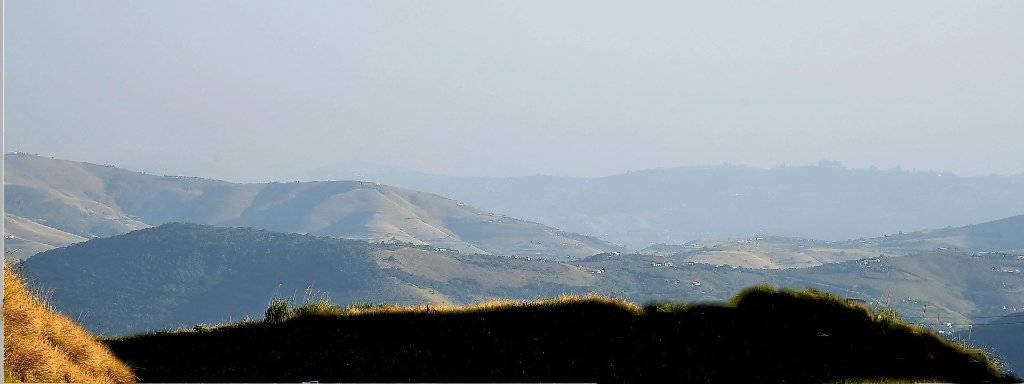
Durban Poison is one of the last remaining pure landrace sativa strains on earth. A landrace means it developed over generations in a single geographic environment — shaped by the specific soil, altitude, rainfall, sunlight and people of KwaZulu-Natal. It has never been intentionally crossed with another strain. That is precisely why it is unlike anything else.
Most cannabis available today — including much of what is sold under the name Durban Poison internationally — is a hybrid, a copy, or a descendant grown in foreign soil. The original is still here. It has always been here.
What It Feels Like
Durban Poison is 100% sativa. Its effects are unlike indica or hybrid strains. There is no heaviness, no sedation, no couch-lock.
Mental Clarity
Clean, energetic uplift. Used by artists, writers and musicians who need to think, not switch off.
Focus & Confidence
Naturally high THC balanced by the full cannabinoid spectrum of a true landrace. Alert without anxiety.
Taste & Aroma
Sweet, earthy, anise and pine. Immediately recognisable. Impossible to replicate outside its origin.
It is not a recreational escape. It is an enhancement. Most consumers in legal international markets who believe they have tried Durban Poison® have, in all likelihood, never tasted the real thing.
Good For
Creativity & Focus
Widely used by artists, writers, musicians and professionals who need mental clarity and sustained concentration.
Energy & Motivation
Effective for fatigue, low mood and lack of drive. A functional daytime strain — not a sedative.
Stress & Depression
The uplifting sativa effect has been reported to ease anxiety-related low mood without the heaviness of indica strains.
Durban Poison is particularly well suited to morning and daytime use. It does not interfere with alertness, productivity or physical coordination. Many medical cannabis users report it as one of the few strains that allows them to function normally while managing chronic conditions.
Not Recommended For
Durban Poison is a powerful, high-THC pure sativa. It is not suitable for all users or all situations.
Anxiety-Prone Users
High-THC sativas can intensify anxiety in sensitive individuals. Start with a very low dose if this applies to you.
Evening & Sleep Use
This is not a sleep strain. The energising effect makes it a poor choice for winding down or insomnia.
Low-Tolerance Beginners
The potency of genuine landrace Durban Poison® is significantly higher than most commercial hybrids. Approach carefully.
It should not be combined with alcohol, stimulants, or medication that affects heart rate or blood pressure without first consulting a medical professional.
Why It Cannot Be Reproduced
Horticulturists, botanists and geneticists have studied and documented what the French call terroir — the total natural environment that shapes a product: soil composition, altitude, sunlight angle, rainfall pattern, temperature variation between day and night, microbial content of the earth, and the generational knowledge of the people who cultivate it.
These factors interact in ways that cannot be transported. You can take a seed. You cannot take the KwaZulu-Natal hills.
This principle has been legally established and scientifically validated for Champagne, Cognac, Scotch whisky, Sherry, Port, Rooibos tea, Kobe beef and Parma ham. The law recognises what science has proved: where something comes from is inseparable from what it is.
A seed removed from KwaZulu-Natal and grown in California or the Netherlands does not produce Durban Poison®. It produces a plant descended from Durban Poison® — growing in foreign soil, under a different sun, tended by different hands. The name may be the same. The product is not.
How It Got Its Name
The name iNkosi yeSativa — the King of Sativa — was not given by the growers. It did not come from a marketing agency or a brand consultant. It was given by the people who first encountered it through trade: travellers, sailors and merchants passing through the port of Durban, who carried it to other parts of the world and could find no other words for what they experienced.
Durban was the door. The hills of KwaZulu-Natal were always the source.
Champagne was not named by a marketing agency either. It was named for the place. Bourbon. Cognac. Parma. Single-malt Scotch. These names mean something because they refer to a specific origin — and protecting that origin is what gives the name its value. The same is true here.
1879: The Evidence That Cannot Be Argued
On 22 January 1879, at the Battle of Isandlwana, more than twenty thousand Zulu warriors defeated a heavily armed British imperial force — the strongest professional army in the world at the time. It remains one of the most studied military upsets in history.
What is less discussed in Western accounts is what the Zulu sangomas — traditional medicine specialists — gave the warriors before battle. Scientific analysis of the preparations used confirms it: a cannabis-based snuff with extraordinarily high THC content and virtually no detectable sedative compounds. Not the numbing, relaxing effect of recreational cannabis. The opposite — focused, fearless, pain-suppressing, with the sedative effect removed entirely.
The Zulu people had not simply discovered cannabis. They had refined it. They understood how to extract what they needed and suppress what they did not. This was not accidental. It was generations of botanical knowledge applied with precision — in KwaZulu-Natal, nearly a century before any Western traveller is said to have "discovered" Durban Poison®.
This is the plant. This is where it comes from. This is how long it has been understood by the people who grew it. The idea that someone arrived from California in 1970 and taught KwaZulu-Natal something about this plant is not just wrong. It is historically illiterate.
The Narrative We Correct
The city of Durban was named in 1835 — after Sir Benjamin D'Urban, Governor of the Cape Colony. The plant that would carry that name was already growing in the hills of KwaZulu-Natal. Already cultivated. Already selected. Already known. One hundred and thirty-five years before any American is said to have arrived with a collecting bag.
The story told on American and European cannabis sites — that a Western traveller arrived in South Africa in the 1970s, recognised something the local people had failed to understand, took a few seeds back to California, and developed the strain from there — is not just inaccurate. It is an insult to the historical record and to the people of KwaZulu-Natal who cultivated this plant across generations of persecution, poverty and apartheid-era suppression.
Here is what actually happened. Someone took seeds out of KwaZulu-Natal. Those seeds were grown in California, in Californian soil, under a Californian sun, crossed with other strains over decades to make them easier to grow, higher yielding, or more commercially viable. What grew was not Durban Poison®. It was a commercial product that needed a name. And the name was already famous.
No one in California, the Netherlands, or anywhere outside KwaZulu-Natal has ever grown Durban Poison®. They have grown a product derived from seeds that left here — seeds that have since been crossed, stabilised, modified, and adapted to foreign climates so many times that whatever original genetics remain are buried under generations of commercial breeding. You cannot call that Durban Poison® any more than you can call a Cape Town sparkling wine Champagne. The law that governs Champagne says so. The same law applies here.
Which means nobody outside KwaZulu-Natal has ever smoked real Durban Poison®. Not the people buying it in California dispensaries. Not the people ordering it from Dutch seed banks. Not the reviewers on Leafly or Weedmaps who rated it five stars. What they smoked had an origin — California, the Netherlands, wherever it was grown and crossed and modified over fifty years of commercial breeding. What it did not have was a name. Because it is not Durban Poison®. It is a Californian hybrid sativa that was given a famous name it was never entitled to. The seed banks know this. The large-scale producers know this. And now, so does the law.
The iNkosi yeSativa Co-operative is in the process of formalising Geographical Indication status for Durban Poison — the same legal framework that prevents anyone outside the Champagne region of France from selling sparkling wine under that name. When that framework is in place, the use of the name Durban Poison® by any producer outside the certified geographic boundaries of KwaZulu-Natal will be a violation of international trade law. That process is underway. The transition period has begun.
The Co-operative
The iNkosi yeSativa Co-operative exists to return the ownership and benefit of this name, this strain, and this brand to the people who created it — the independent smallholder cultivators of KwaZulu-Natal whose families have grown this plant across generations.
KZN Only
Cultivated exclusively within KwaZulu-Natal by verified Co-operative member-growers. No exceptions.
No Chemicals
Rain-fed, sun-cured, pesticide-free. Grown in the traditional hill country of KZN, outside industrial and urban areas.
Pure Landrace
Unmixed, unmodified. Selected for quality by the growers themselves. Traceable directly to its source.
The Co-operative is formally pursuing Geographical Indication (GI) and Protected Designation of Origin (PDO) status for Durban Poison — the same legal framework that protects Champagne, Cognac, Scotch whisky and Rooibos. This is not a marketing exercise. It is a legal recognition of what has always been true.
Durban Poison Official · iNkosi yeSativa Co-operative
KwaZulu-Natal, South Africa · The only genuine, original, certified source.